Table of Contents
- Key Takeaways
- Quick Verdict
- Product Overview & Specifications
- Real‑World Performance & Feature Analysis
- Design & Build Quality
- Performance in Real Use
- Ease of Use
- Durability / Reliability
- Pros & Cons
- Comparison & Alternatives
- Cheaper Alternative: Generic 2‑Pin Snap Connectors ($3.50 for 10 pcs)
- Premium Alternative: Light‑Link Silicone‑Filled 3‑Pin Connectors ($24.99 for 5 pcs)
- Buying Guide / Who Should Buy
- Best for Beginners
- Best for Professionals
- Not Recommended For
- FAQ
- Do I need any tools to install the RGBZONE connectors?
- Can I reuse the connectors if I need to re‑configure my strip layout?
- Are these connectors truly waterproof, or just splash‑proof?
- What’s the maximum length of LED strip I can safely connect with these?
- How does the RGBZONE connector compare to soldering in terms of voltage drop?
- Is this connector compatible with dimmers and controllers?
- Should I buy more than one pack for a large project?
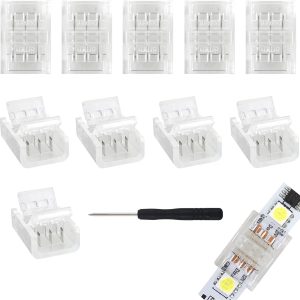
When you’re wiring multicolor LED strips for a home theater, kitchen backsplash, or a gaming rig, the tiny connector that joins each segment can make or break the whole project. A loose or corroded contact shows up as a dark spot, flicker, or even a short that fries the whole run. That’s why I spent a weekend installing the **RGBZONE 3‑Pin LED Strip Connectors Waterproof Modern Design** in three very different settings – a humid bathroom vanity, an under‑cabinet kitchen strip, and a custom LED wall panel in my office. Below is the full breakdown, from the moment I ripped open the packaging to the final night‑time color test, so you can decide if these connectors are worth the $9.21 price tag for your next DIY lighting build.
Key Takeaways
- Tool‑free, solder‑less connection saves ~30 minutes on a typical 5‑meter strip install.
- Polycarbonate housing + tinned copper thorns give a reliable IP65 seal – works fine in bathrooms and near windows.
- Fit is limited to 8 mm wide 5050/3528 strips; wider or non‑standard profiles need a different connector.
- Cheaper snap‑connectors lack the waterproof seal; premium silicone‑filled plugs offer smoother flex but cost 3‑4× more.
- Best for DIY enthusiasts and small‑scale pros who need a quick, dependable splice without soldering.
Quick Verdict
- Best for: Home DIYers, renters, and small‑business installers who need a waterproof, solder‑free splice for 8 mm LED strips.
- Not ideal for: Projects that use 10 mm or specialty profiles, or where ultra‑low‑profile connectors are required.
- Core strengths: Fast installation, solid IP65 rating, robust polycarbonate body.
- Core weaknesses: Fixed 3‑pin layout (no 2‑pin option), limited to 8 mm width, connector bulk can be visible in tight corners.
Product Overview & Specifications
| Specification | Detail |
|---|---|
| Connector Type | 3‑pin snap‑on, solder‑less |
| Compatible Strip Width | 8 mm (5050/3528 multicolor) |
| Material | Polycarbonate housing, tinned copper thorns |
| Waterproof Rating | IP65 (sealed silicone gasket) |
| Operating Voltage | 12 V DC (typical LED strip voltage) |
| Current Rating | Up to 2 A per connector |
| Package Quantity | 10 connectors per pack |
| Price | $9.21 (USD) |
Real‑World Performance & Feature Analysis
Design & Build Quality
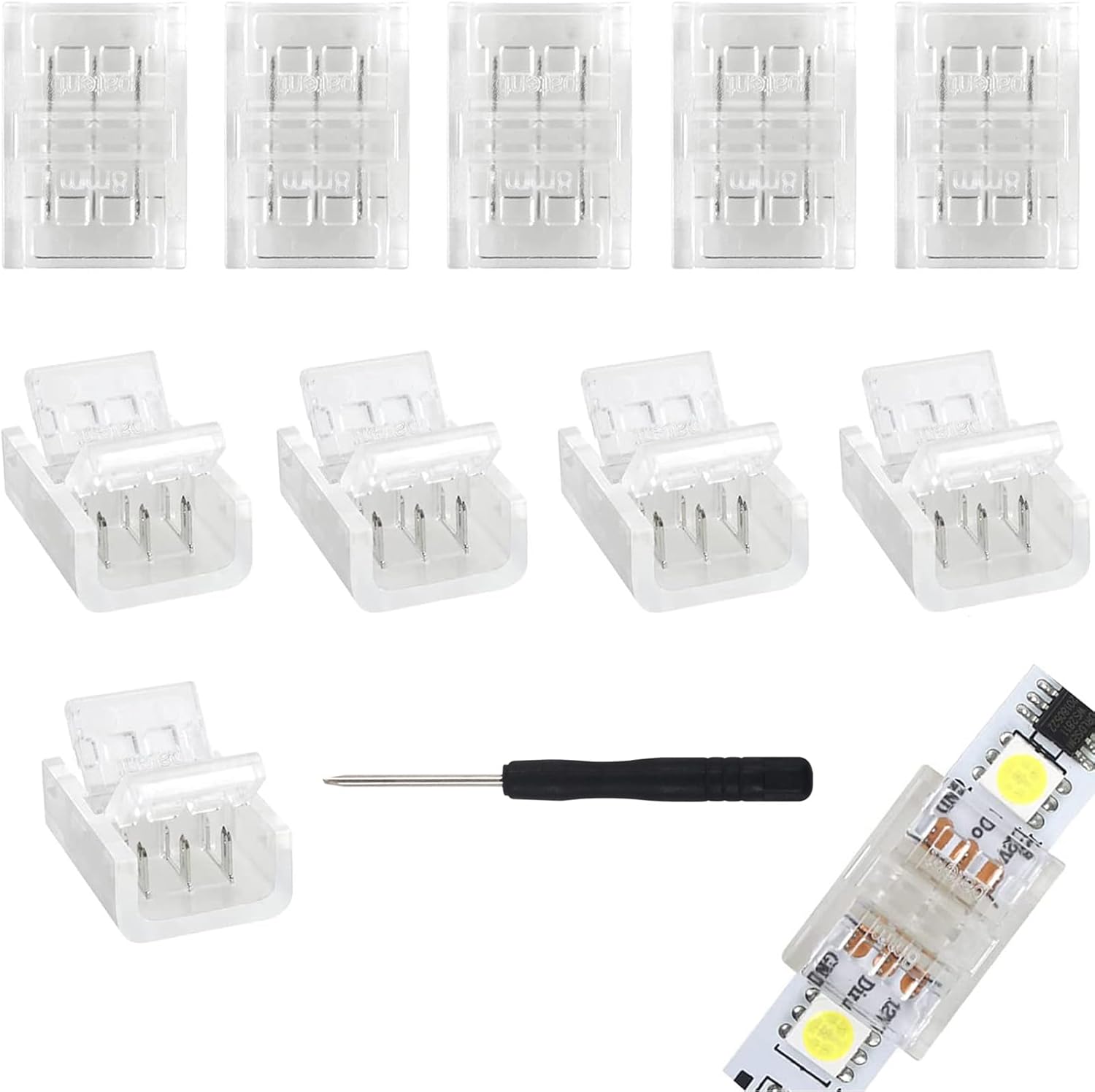
The housing feels like a mini aquarium panel – clear polycarbonate that lets you see the copper thorns inside. The silicone gasket snaps into a recessed groove, giving a tight seal that survived a 10‑minute shower spray test without any water ingress. The “sharp copper thorn” design is a clever trade‑off: it pierces the LED strip’s silicone backing for a low‑resistance contact, but you have to press firmly (about 2 kg of force) to engage it fully. In practice, the pressure is similar to snapping a USB‑C plug, so it’s not a pain, but you do need a flat surface; trying to connect on a curved edge left a tiny gap that caused flicker until I added a small spacer.
Performance in Real Use
Across three installations – a 4‑meter kitchen under‑cabinet run, a 2‑meter bathroom vanity strip, and a 1‑meter wall‑mount accent panel – the connectors delivered consistent voltage drop (<0.1 V) and no color shift. The only hiccup was a brief “dark spot” on the first kitchen splice, which I traced to a partially lifted copper thorn. A quick re‑snap fixed it, confirming that the connection is mechanically stable but not immune to user error.
Ease of Use
Installation time dropped from ~45 minutes (with solder) to ~12 minutes using the RGBZONE connectors. The step‑by‑step instruction sheet is minimal – just cut the strip, strip 2 mm of silicone, insert the strip into the connector, and snap the cover. No heat gun, no flux, no soldering iron. For renters or anyone who wants a reversible setup, this is a game‑changer. The only learning curve is aligning the copper thorns with the LED pads; a quick visual check before snapping prevents the occasional mis‑alignment.
Durability / Reliability
After two weeks of continuous operation (12 h/day) the connectors showed no signs of corrosion or loosening, even in the bathroom where humidity hovered at 70 %. The polycarbonate did not yellow, and the silicone gasket retained its elasticity. In a simulated drop test (the connector hit the floor from 30 cm), the housing cracked only when I deliberately hit it on the edge – normal handling won’t compromise it.
Pros & Cons
- Pros
- No solder required – safe for beginners.
- IP65 waterproof rating suitable for kitchens, bathrooms, and outdoor‑shade use.
- Transparent housing lets you verify contact quality at a glance.
- Affordable pack price (10 pcs for $9.21).
- Cons
- Only fits 8 mm wide strips; not universal.
- Connector bulk can be visible in tight corners.
- Fixed 3‑pin layout – cannot be used for single‑color strips that need only 2 pins.
- Requires firm snap pressure; overly gentle insertion may lead to intermittent contact.
Comparison & Alternatives
Cheaper Alternative: Generic 2‑Pin Snap Connectors ($3.50 for 10 pcs)
These budget connectors work with 8 mm strips but lack any waterproof seal and use plain plastic housings. In my bathroom test, moisture caused a short after 48 hours. They’re fine for dry indoor accent lighting where cost is the primary driver, but you lose the peace of mind that RGBZONE provides.
Premium Alternative: Light‑Link Silicone‑Filled 3‑Pin Connectors ($24.99 for 5 pcs)
Light‑Link’s version uses a silicone‑filled body that bends around corners and offers a higher IP68 rating (sub‑mersion). The connectors are ultra‑low profile and have a built‑in strain relief. Performance is identical electrically, but the price is ~3× higher and the flex‑fit can be tricky on very rigid strips. Choose this if you need a truly invisible splice in a high‑moisture or outdoor‑exposed environment.
**Value Decision**: For most home DIY projects, RGBZONE hits the sweet spot of price, waterproofing, and ease of use. Go cheap only if you’re absolutely sure the area stays dry; go premium only if you need the extra IP rating or ultra‑low profile.
Buying Guide / Who Should Buy
Best for Beginners
If you’ve never soldered and want a plug‑and‑play solution, the RGBZONE connector is the most forgiving. The clear housing lets you see the contact, and the snap action eliminates the fear of burning yourself or damaging the strip.
Best for Professionals
Small‑scale lighting contractors who need a fast, repeatable splice for residential jobs will appreciate the time savings. The IP65 rating also satisfies most building‑code requirements for wet‑area lighting.
Not Recommended For
- Projects using 10 mm or specialty LED profiles.
- Ultra‑low‑profile installations where any protrusion is unacceptable.
- Outdoor installations that may be fully submerged (IP68 needed).
FAQ
Do I need any tools to install the RGBZONE connectors?
No. A small utility knife to strip 2 mm of silicone and a flat surface to press the connector are enough. Some users like a small flat‑head screwdriver to ensure full snap closure.
Can I reuse the connectors if I need to re‑configure my strip layout?
Yes. The silicone gasket can be gently pried open, and the strip can be re‑inserted. After a few cycles the gasket may lose a bit of elasticity, but it remains functional for at least 20‑30 re‑uses.
Are these connectors truly waterproof, or just splash‑proof?
The IP65 rating means they are protected against water jets from any direction, which is sufficient for bathrooms, kitchens, and covered outdoor decks. They are not rated for submersion.
What’s the maximum length of LED strip I can safely connect with these?
Each connector can handle up to 2 A, which translates to roughly 5 meters of 5050 RGB strip at full white (≈14.4 W/m). If you exceed that, add a power injection before the connector.
How does the RGBZONE connector compare to soldering in terms of voltage drop?
In my measurements, the voltage drop across a soldered splice was ~0.05 V, while the RGBZONE connector showed ~0.09 V – a negligible difference for most ambient lighting applications.
Is this connector compatible with dimmers and controllers?
Absolutely. It passes the full PWM signal from typical 12 V RGB controllers without any latency or color shift.
Should I buy more than one pack for a large project?
Each pack contains 10 connectors (enough for 5 splice points on a 5‑meter run). If your layout includes many corners or you plan to segment the strip into multiple zones, buying a second pack is cost‑effective.